What does a dust mite look like?

In dit artikel
Dust mites: you often hear about them in connection with allergies, but what exactly are they? And what does a dust mite look like? In this blog, we delve deeper into these invisible creatures that are found in almost every household.
What is a dust mite?
The dust mite is a minuscule spider-like creature that feeds on skin flakes from humans and pets. They thrive particularly well in warm, humid environments such as mattresses, pillows, duvets, fabric furniture, and carpets. Although they do not transmit diseases, they cause allergic reactions in many people, such as sneezing, a stuffy nose, watery eyes, or asthma symptoms.
How big is a dust mite?
An adult dust mite is approximately 0.2 to 0.3 millimeters in size. That is smaller than a speck of dust, so they are virtually invisible to the naked eye. You can only see them well with a microscope.
What does a dust mite look like under a microscope?
Under a microscope, you can see that the dust mite has a pale white or translucent body with eight legs. Its body resembles that of a tiny spider. They have no eyes and no antennae. Their body is oval-shaped and covered with fine hairs. Some people find them scary to look at, but fortunately, they are completely harmless to those who are not allergic to them.

Why don't you see them in your house?
Because dust mites are so small and light, they remain invisible and easily move through dust in the air. They also have no reason to show themselves: they hide in the depths of mattresses, blankets, and upholstered furniture. It is therefore quite possible that you have thousands of dust mites in your bed without ever having seen one.
Can you detect dust mites?
There are special test kits available to detect the presence of dust mite allergens in the home. These do not measure the mites themselves, but their droppings, which are responsible for allergic reactions. You can also look for symptoms such as frequent sneezing or shortness of breath, especially after waking up.
Conclusion
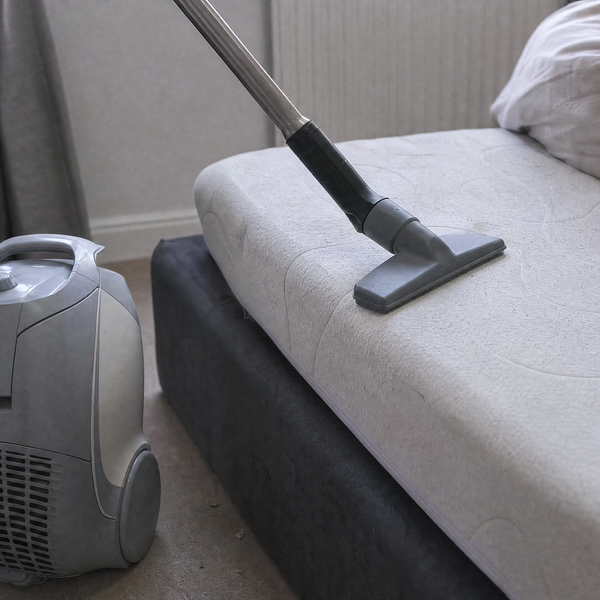
Dust mites are tiny, spider-like creatures that are invisible to the naked eye. Yet they are present in almost every household and are a major source of allergens. Do you want to suffer less from them? Then regular cleaning, good ventilation, and the use of anti-allergenic covers or specialized vacuum cleaners are essential.
Tip: Consider using a vacuum cleaner with a HEPA filter or a special mattress helper like the MiteMaster® to effectively tackle dust mites.