Humidity and Dust Mites: Why a Humidifier Is Counterproductive
In dit artikel
There is one measure against dust mites that costs nothing, takes little effort, and yet is consistently overlooked: making your bedroom drier. And there is one device that people with allergy symptoms regularly buy, which actually exacerbates the problem: the humidifier.
Dust mites don't drink
This is the key fact. A dust mite has no mouth with which to drink. It absorbs moisture directly from the air, through its skin. This makes it completely dependent on the humidity in the room where it resides.
Below approximately 50% relative humidity, it becomes difficult for them: they slowly dehydrate, reproduce less effectively, and the population declines. Above 60%, they thrive. In between is the zone where ventilation truly makes a difference.
Important: dry air does not kill mites quickly, nor does it remove the allergen that is already present. It inhibits growth. That is precisely why it works well as a supplement and not as a replacement for cleaning.
Why a humidifier is counterproductive
In winter, indoor air is dry, and dry air causes a ticklish throat and a stuffy nose. Many people then buy a humidifier. Understandable, but if your symptoms are due to dust mites, you are precisely increasing the factor on which the mites depend.
If you are not sure of the cause of your symptoms, this is one of the few situations where two reasonable measures counteract each other. Discuss this with your doctor before investing in a humidifier.
Why autumn is the hardest
Many people think that dust mite symptoms peak in winter. In practice, it's often September to November. The population is at its largest after a warm, humid summer, and at the same time, windows close and heating turns on — causing the allergen to accumulate indoors.
Deep in winter, the population decreases because heating dries out the air. What remains is the allergen from dead mites, which simply stays in your mattress. This explains why symptoms can persist even when the mites themselves have long been in decline.
What you can do specifically
- Place a hygrometer in the bedroom. It costs a few euros and makes it measurable instead of just a feeling. Aim for 40 to 50%.
- Ventilate every morning for ten minutes with the window wide open. More effective than a window left slightly ajar all day.
- Leave your bed uncovered. Turn back the duvet instead of making the bed immediately, so that moisture from the night can evaporate. This is the most underestimated habit on this list.
- Do not dry laundry in the bedroom. A drying rack releases liters of moisture.
- Ventilate the bathroom separately and keep the door closed during and after showering.
- Be cautious with many plants in the bedroom.
About temperature and freezing
Two frequently asked questions. Heat works: from approximately 55 to 60°C, the mite dies, and that is precisely why bedding should be washed at 60°C and not 40°C.
Freezing also works, but only on what fits in the freezer. A cuddly toy for a night at minus eighteen degrees kills the mite. Wash it afterwards anyway, because the allergen is still there — dead mites, residual proteins.
Where it all comes together
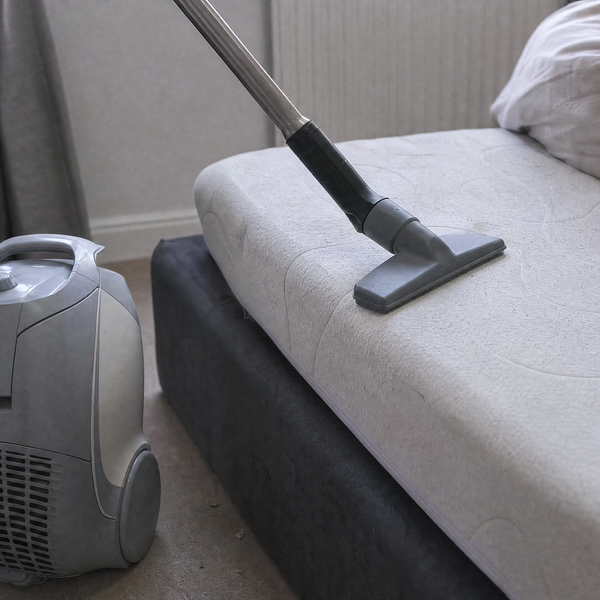
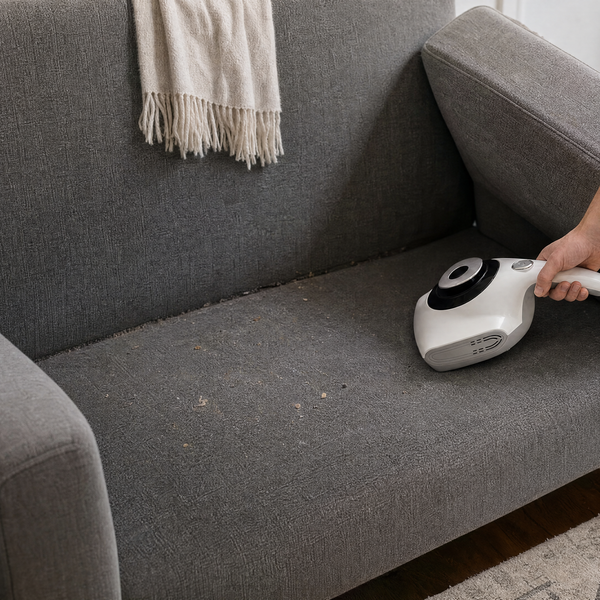
Humidity inhibits growth. Washing at 60°C kills and removes, but only what fits in the machine. For your mattress, sofa, and pillows, only one route remains: mechanically extracting the allergen from the fibers and retaining it in a filter fine enough.
The filter medium of the MiteMaster® has been independently tested for this according to EN 1822: 99.97% capture at the most difficult particle size to capture. The measurement data can be reviewed.
Start with the hygrometer. It's the cheapest step you can take today, and it will immediately tell you if this is even a factor for you.