Dust mite control: which technique really works?
In dit artikel
Are you allergic to dust mites? Then you know how annoying sneezing, breathlessness or itchy eyes can be. Many people try to combat these allergens with sprays, covers or special bedding. But how effective are they really? In this blog, we explain which approach truly tackles dust mites.
Table of Contents
- Combating dust mites: what really works?
- Dust mite spray
- Anti-dust mite duvet or mattress cover
- A special dust mite vacuum cleaner
- What about UV-C light?
- How to tackle it
- Conclusion
Combating dust mites: what really works?
Dust mites thrive best in warm, humid environments such as mattresses, pillows and duvets. They feed on skin flakes and leave behind droppings that cause allergic reactions. Those who want to tackle these mites often resort to sprays, anti-mite covers or mattress covers. Not all of these methods are equally effective.
Dust mite spray
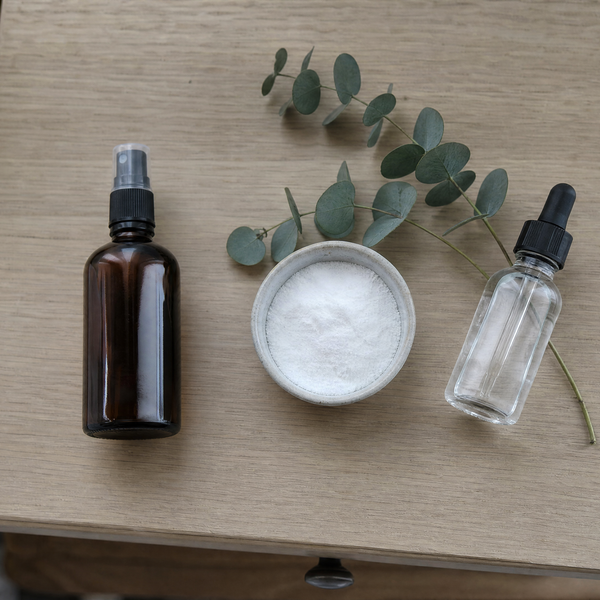
A dust mite spray is often used on bedding, mattresses and curtains. Some sprays can temporarily bind allergens, but they do not solve the underlying problem and must be reapplied repeatedly. Moreover, some contain chemical substances that can irritate the skin or respiratory tract.
Anti-dust mite duvet or mattress cover
An anti-dust mite duvet or mattress cover can reduce exposure. These covers are often made of dense fabrics that mites have difficulty penetrating. They contain the problem, but do not remove the mites: they remain living in the mattress or pillow itself. Wash them regularly at 60°C, otherwise they will become a breeding ground themselves.
A special dust mite vacuum cleaner
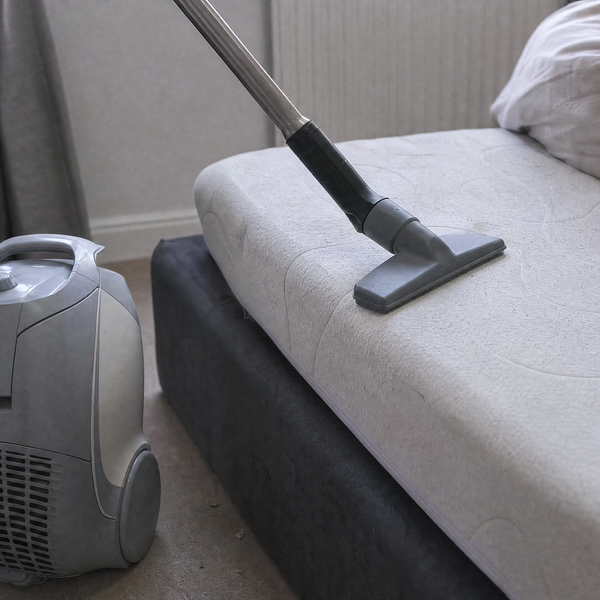
The most direct approach is the mechanical removal of mites and allergens from the mattress. This is done by a special dust mite vacuum cleaner: a high-frequency vibrating plate or rotating brush loosens the mites and droppings from the deeper fibers, powerful suction removes them, and an H13 HEPA filter retains 99.97% of fine particles (tested according to EN 1822) instead of blowing them back into the air.
What about UV-C light?
Some vacuum cleaners also have a built-in UV-C lamp. This provides extra hygiene on the surface during cleaning. See UV-C as a supplement, not as the main method: the real work — loosening, vacuuming and retaining mites and allergens — is mechanical. For safety, the lamp automatically switches off as soon as you lift the device.
How to tackle it
Combine targeted cleaning with good habits: wash bedding weekly at 60°C, keep humidity below 50%, ventilate daily and limit carpets and fabric curtains. Regularly clean mattresses, sofas and pillows with a MiteMaster® MX6 or MX9 Pro; move slowly over the surface for the best result.
Conclusion
Those who want to seriously tackle dust mites should choose an approach that actually removes the mites and allergens. Sprays and anti-mite covers can support, but are often temporary or insufficient. A special vacuum cleaner with a vibrating plate or brush, strong suction power and an H13 HEPA filter tackles the problem at its source — for fewer complaints and a cleaner, healthier home.