Where do dust mites come from? Everything you need to know
In dit artikel
Do you suffer from allergic symptoms such as sneezing, itchy eyes, or breathlessness at home? Dust mites could very well be the culprit. But where do dust mites actually come from, and why do these tiny creatures feel so at home in our houses? In this article, we explain it all and tell you what you can do about it.
What exactly are dust mites?
Dust mites are tiny, spider-like creatures that are barely visible to the naked eye. They do not live on humans or animals, but feed on skin flakes and love warm, humid environments. Beds, mattresses, pillows, carpets, and upholstered furniture are particularly favored habitats.
Where do dust mites come from?
Dust mites do not come from outside but develop indoors once conditions are favorable. They originate in dusty, warm, and humid spaces where there is sufficient food (skin flakes). The likelihood of a dust mite infestation is especially high in the following situations:
- Warm rooms: temperatures between 20 and 25 degrees Celsius are ideal
- High humidity: they thrive especially above 50% humidity
- Textile surfaces: such as carpets, curtains, mattresses, and upholstered sofas
- Poor ventilation: this allows moisture to linger longer
So, you don't "bring dust mites in from outside"; you unknowingly create the perfect environment for them to multiply.
Are dust mites harmful?
In themselves, dust mites are not dangerous, but their droppings and decomposed body parts cause allergies. These tiny particles become airborne and are inhaled, causing symptoms such as:
- Sneezing and runny nose
- Itchy or watery eyes
- Shortness of breath or asthma attacks
- Restless nights due to a blocked nose or coughing
What can you do about dust mites?
Completely eradicating dust mites is almost impossible, but you can significantly reduce their numbers. These are the most important steps:
- Ventilate well – lower humidity below 50%
- Wash bedding at 60°C – this kills mites and their eggs
- Avoid thick carpets and curtains – opt for smooth surfaces instead
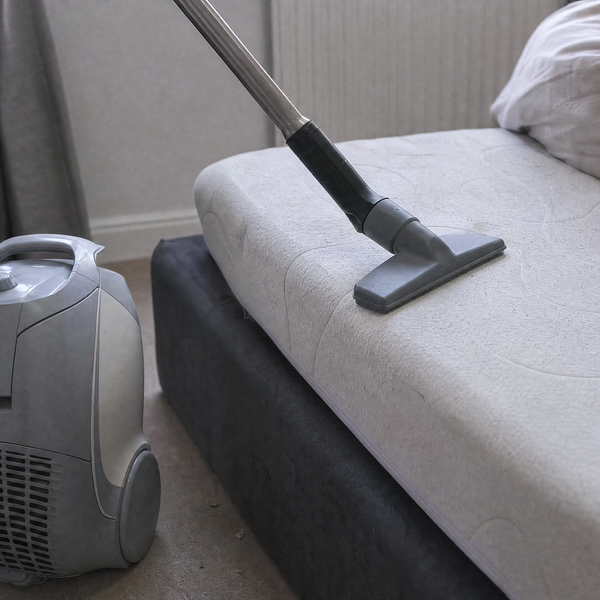
- Use a dust mite vacuum cleaner – such as the MiteMaster® with H13 HEPA filter and vibrating brush
Why a special vacuum cleaner helps
Regular vacuum cleaners often blow some of the allergens back into the air. A MiteMaster® vacuum cleaner is specially designed to safely collect and remove dust mites, their droppings, and fine dust particles:
- Equipped with an H13 HEPA filter
- Vibrating plate or dual rotating brush for deep cleaning in fabric layers
- Powerful suction that removes the loosened dust
- A UV-C lamp for extra surface hygiene
- Washable dust reservoir without creating dust clouds
This way, you make your home noticeably cleaner and effectively alleviate allergy symptoms.
Conclusion
Dust mites don't just "come from somewhere"; they arise in your home when conditions are favorable. Think of warm, humid spaces with lots of dust and textiles. Fortunately, with the right measures and a good dust mite vacuum cleaner, you can significantly reduce the amount of allergens.
👉 Looking for an effective solution?
Check out our MiteMaster® models – specially developed for people with dust mite allergies.