Anti-Dust Mite Sprays and Home Remedies: What Really Works?
In dit artikel
Search for "dust mite control" and within two clicks you'll find a spray, an oil, or a home remedy. Baking soda, neem oil, eucalyptus, tea tree, steaming, freezing. Some of these have a kernel of truth, others are pure folklore. Below, we'll examine them, with the same question in mind: does this reduce the amount of allergen in your mattress, or not?
First, this: killing is not the same as removing
This is where almost all home remedies fail. You don't react to the living mite, but to proteins in its droppings. These proteins remain in your mattress after the mite dies—they don't disappear on their own.
So, a remedy that kills one hundred percent of mites and removes nothing leaves your allergen level virtually unchanged. Only when you physically remove the material from the fibers does your exposure decrease. Keep that distinction in mind for everything that follows.
Baking soda (sodium bicarbonate)
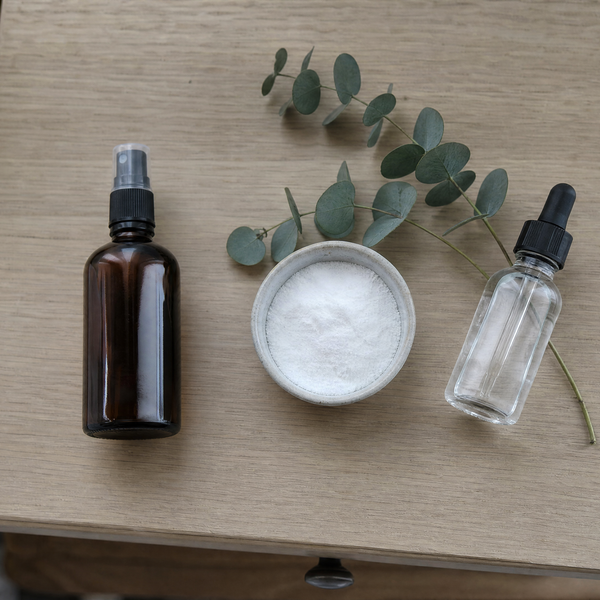
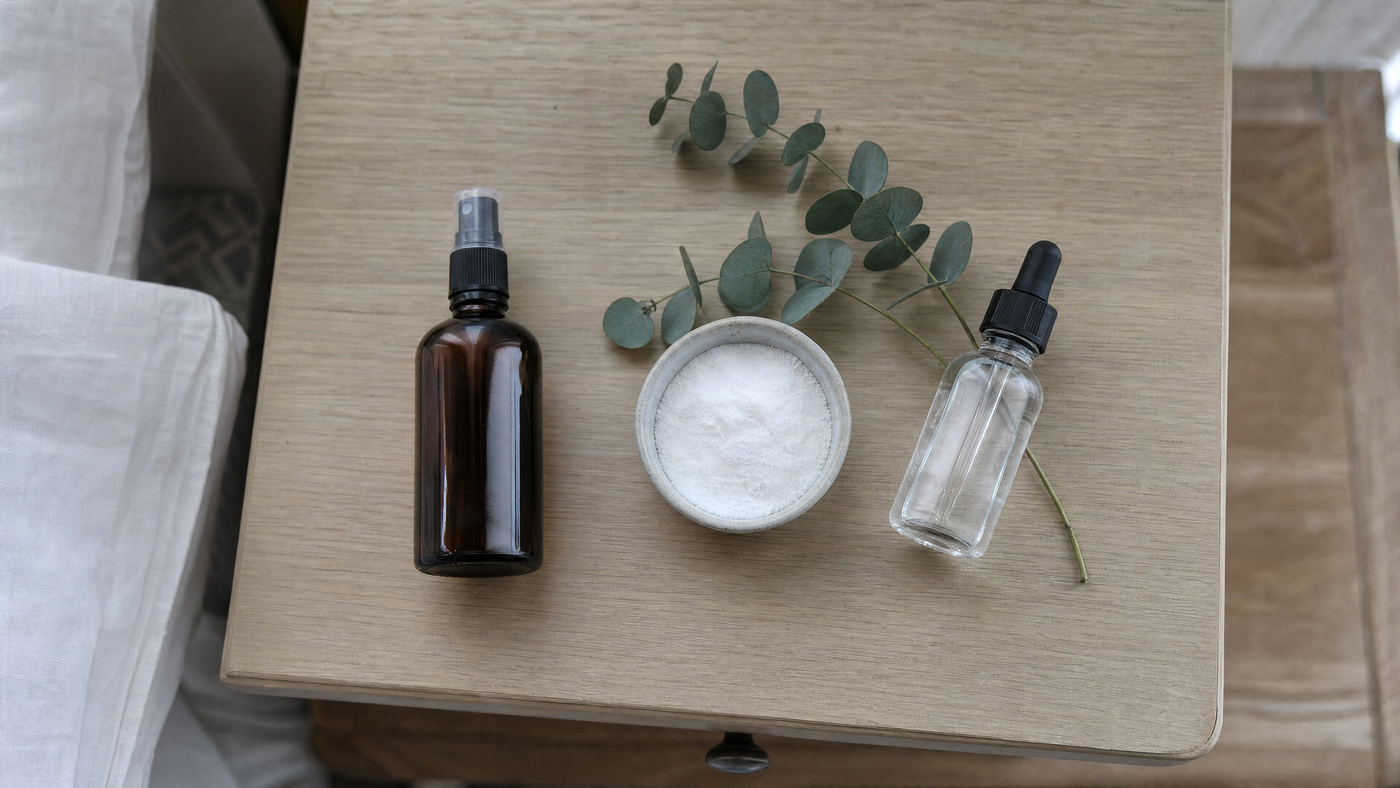
The most popular home remedy, and not without reason: it's cheap, harmless, and it works—just not for what it's advertised. Baking soda binds moisture and neutralizes odor. This makes it perfectly suitable for freshening up a musty mattress.
What it doesn't do is kill dust mites or break down allergens. The often-shared claim that mites "dehydrate" due to bicarbonate has never been substantiated at the concentrations you would use at home. Feel free to use it for odor, but don't count on it for control.
Essential oils: neem, tea tree, eucalyptus
There's more to this than baking soda. Mite-killing effects have been demonstrated for various essential oils in laboratory research. The problem lies in translating this to practice: in the lab, work is done with direct exposure to high concentrations for extended periods, and not with a few sprays on a mattress surface.
Furthermore, a spray reaches the surface and not the layer underneath, where most of the material is. And again: dead mites, remaining allergens. Finally, some oils—tea tree in particular—are toxic to cats. Be careful with this if you have pets.
Steaming
High temperatures kill mites, that's true. Two objections. Steam introduces moisture into your mattress, and moisture is precisely what dust mites need—a mattress that remains damp for days will subsequently be a better living environment than before. And again: the allergen remains.
For smooth surfaces and thin textiles that dry quickly, steaming is fine. For a thick mattress, the risk is greater than the reward.
Freezing
Works, but only on what fits in the freezer. Freezing stuffed animals overnight will kill the mites. Afterward, still wash them, otherwise the allergen will still be present. For mattresses and sofas, this is obviously not an option.
Mattress covers
Of the non-mechanical measures, this is the best substantiated. A tightly woven cover forms a barrier between you and the allergen in the mattress. Conditions: it must enclose the entire mattress with a zipper, and you must wash it periodically—because new material will simply accumulate on the cover.
A cover removes nothing; it screens. That's an excellent strategy, provided you don't forget the rest of your bed and bedroom.
What remains
If you compare everything, three measures hold up:
- Washing at 60°C. Kills mites and washes away allergens. The only measure that does both, but only usable for what fits in the machine.
- Humidity below 50%. Dust mites draw moisture from the air. Ventilation costs nothing.
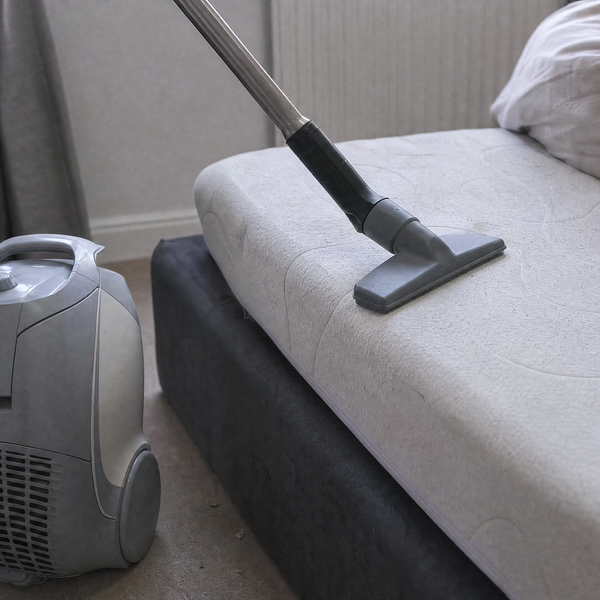
- Mechanical removal. For everything you cannot wash: loosen from the fibers, vacuum, and capture in a filter fine enough.
That last step is what we focus on. The filter medium of the MiteMaster® has been independently tested according to EN 1822 for 99.97% capture of the most difficult-to-capture particle sizes, with measurement data and report number that you can review. This is precisely the test we missed with every home remedy above.
The question you can always ask
For every remedy you encounter: does this remove allergen, or does it only kill mites? And has that been independently measured, or is it only on the packaging? Two questions that most miracle cures do not survive.