Dust mite allergy in dogs and cats: where it goes wrong
In dit artikel
A dog that keeps scratching, recurring ear infections, a cat licking bald patches. Often, food is considered first, yet dust mites are just as frequently the culprit in pets. The tricky part: the mites are in your home, so the solution is in your hands.
How to recognize it?
In dogs and cats, a dust mite allergy rarely manifests as sneezing, unlike in humans. It almost always affects the skin. Signs you might observe:
- persistent scratching, licking, or biting, especially on paws, armpits, belly, and ears;
- recurring ear infections without a clear cause;
- red or thickened skin, bald patches;
- symptoms that are present year-round instead of being seasonal;
- symptoms that appear worse in the morning or after sleeping.
The latter is the most deceptive sign, and immediately the strongest indicator of dust mites. While a pollen allergy peaks in spring, dust mites are present year-round — often worsening in autumn when the heating comes on and indoor humidity rises.
Important: these signs can also indicate fleas, food allergies, fungi, and scabies. Do not self-diagnose. A veterinarian can determine what your pet is reacting to with an intradermal test or blood test. This article focuses on what you can do at home afterward.
Why the pet bed is the problem
Dust mites feed on skin flakes and require moisture. A dog bed or cat cushion provides both in abundance: an animal lies on it for hours a day, sheds flakes, and the filling retains moisture. Additionally, most pet beds have thick fillings that cannot be washed — only the cover.
If your pet also sleeps with you on the bed or sofa, you simply double the number of places where allergens accumulate. And conversely: your mattress gains an extra source of skin flakes.
What you can do at home
The approach is the same as for humans, with a few emphases:
- Wash the cover weekly at 60°C (140°F). Lower temperatures do not reliably kill mites. When purchasing a new pet bed, choose one with a removable, washable cover.
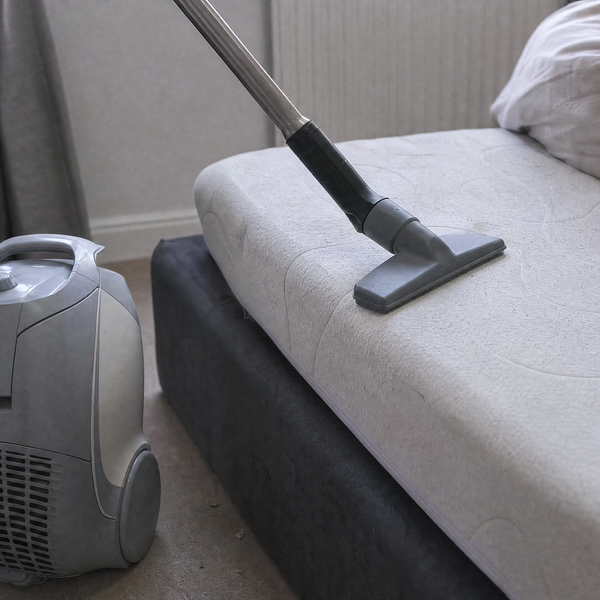
- Mechanically clean the filling. What you cannot wash, you must vacuum — with a device that genuinely captures the allergen instead of blowing it back into the room.
- Keep humidity below 50%. Ventilate, even in winter. This is the cheapest and most effective measure.
- Limit the number of resting spots. Two regularly maintained spots are better than six neglected ones.
- Include the bedroom. If your pet sleeps with you, clean the mattress and pet bed in the same session.
The vacuuming pitfall
This is precisely where things often go wrong with pet beds. Hair and flakes quickly saturate a filter, and a vacuum cleaner with a weak exhaust filter blows fine allergens out the back. You then shift the problem to the air in the room where your pet lies.
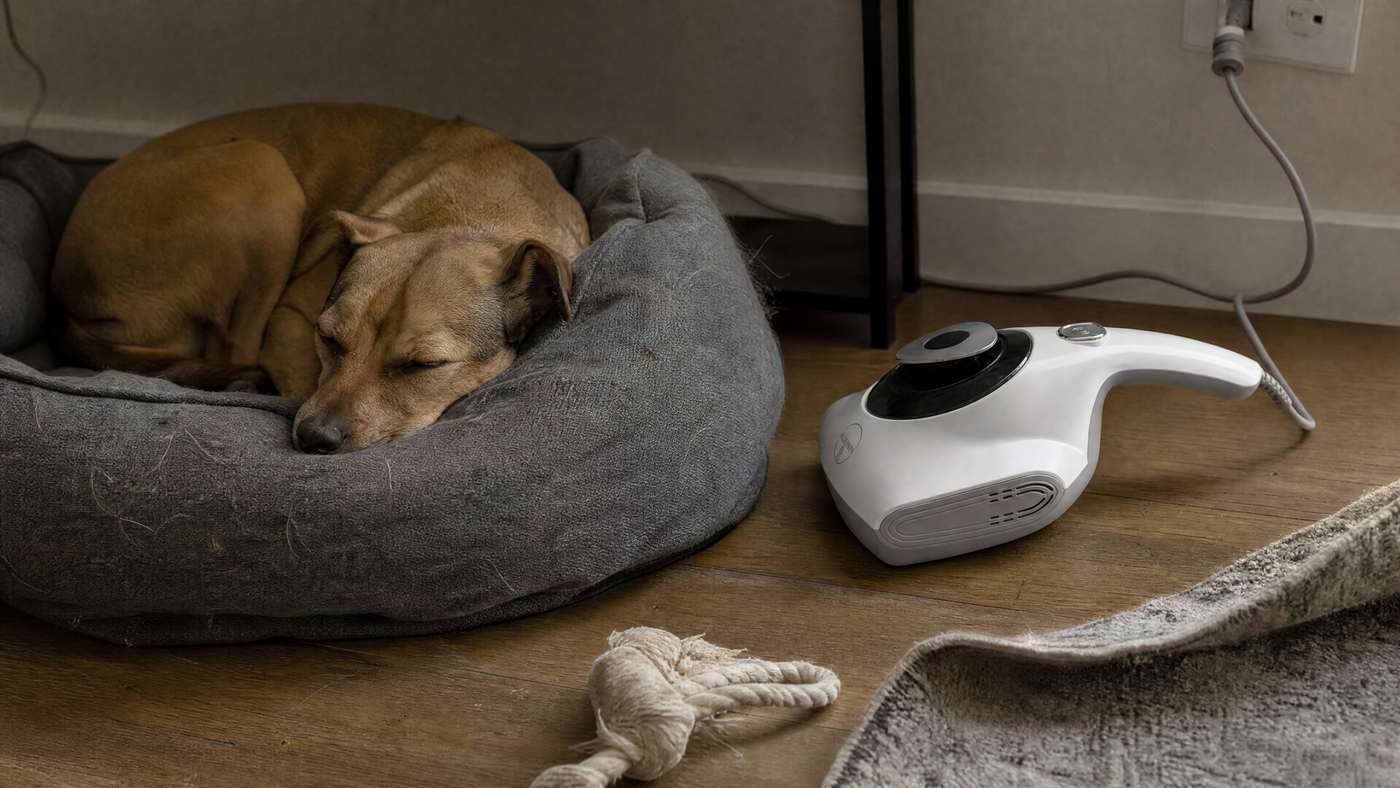
Therefore, filtration is more important here than suction power. We had the filter medium of the MiteMaster® independently tested according to EN 1822: 99.97% capture at the most difficult particle size to capture. The measurement data is available online. If you are cleaning multiple pet beds and mattresses, the MX9 Pro with a double rotating brush is more practical: it extracts hair better from the fibers.
Always rinse the filter after cleaning a pet bed. Hair saturates faster than household dust.
What not to expect
It's impossible to eliminate allergens completely, and it's not necessary. The goal is to consistently reduce exposure, so that the threshold above which symptoms occur is reached less often. Don't expect results after one session: allow several weeks of consistent maintenance before you see a difference in the skin.
And continue to involve your veterinarian. Skin conditions often have multiple causes simultaneously, and environmental measures do not replace treatment.