Mattress cleaning: how to tackle dust mites, stains and odors
In dit artikel
Your mattress is the only textile in your home that you never wash, yet you spend eight hours on it every night. Each night, you lose moisture and skin flakes, which is exactly what dust mites feed on. Cleaning a mattress is therefore not a luxury task but rather essential maintenance. Below is an effective approach, in the correct order.
Step 1: Start dry, not wet
The biggest mistake is to immediately start with water or a cleaning agent. Moisture binds dust into a layer that is then even harder to remove, and a mattress dries slowly. Always work from dry to wet.
First, remove all bedding and wash it at 60°C. Lower temperatures do not reliably remove mites. Afterward, air the mattress for half an hour with the window open.
Step 2: Remove the allergen from the fibres
This is where the real work happens. The allergen — proteins from mite feces — is not on the surface but between the fibres. Vacuuming alone does little because the particles are stuck.
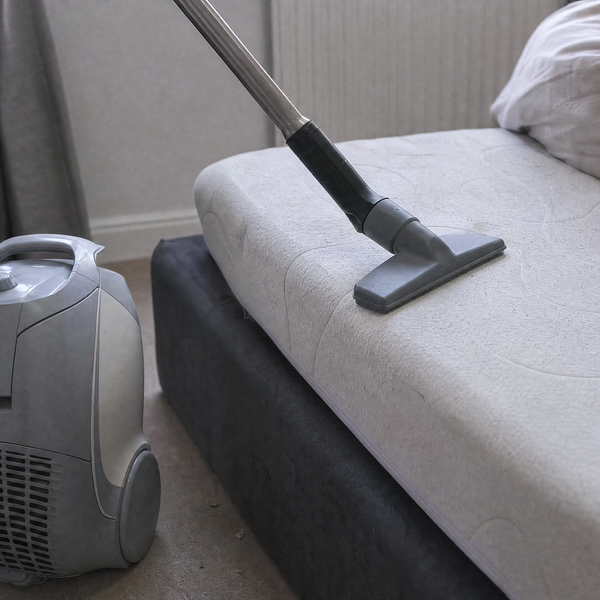
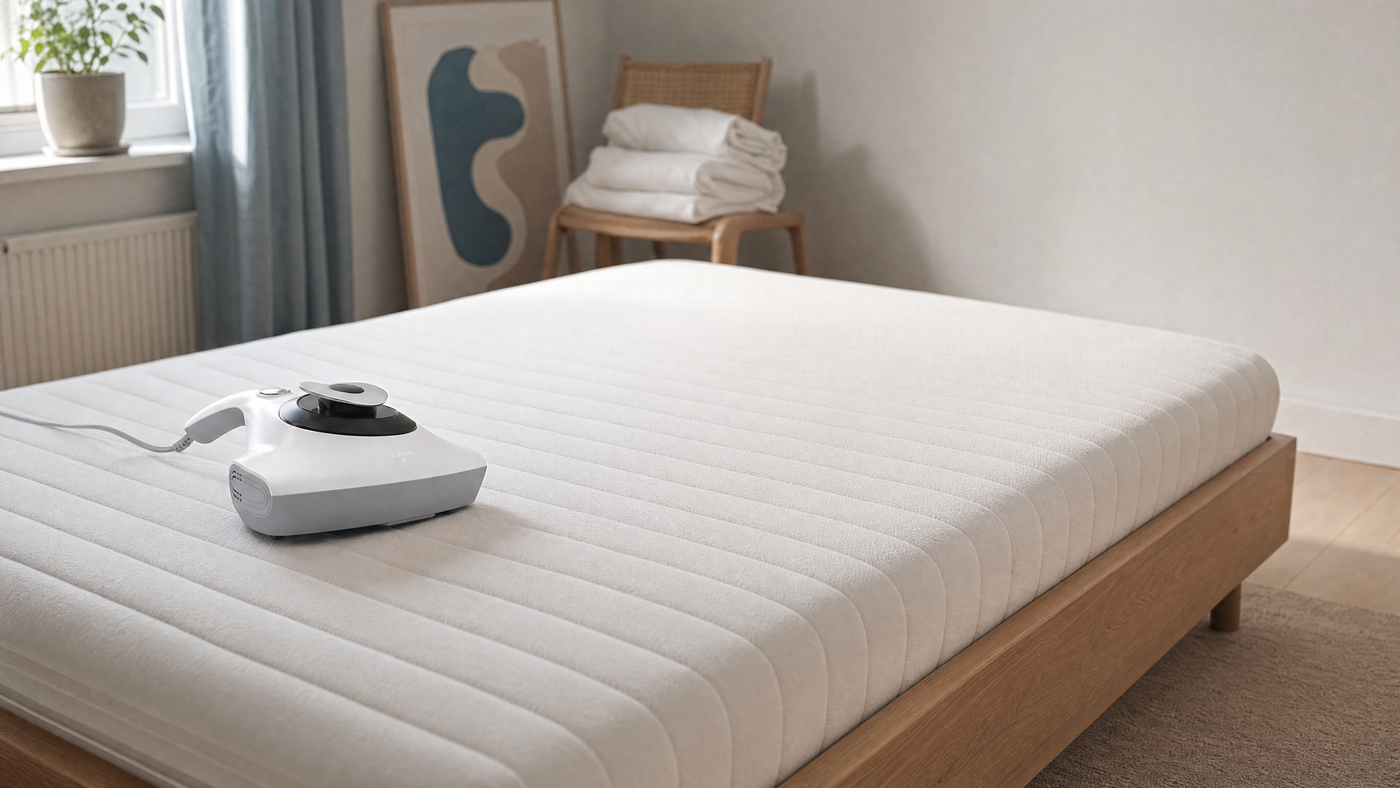
What does work is a combination: first loosen, then vacuum, then retain. A high-frequency vibrating plate or rotating brush dislodges mites and allergens from the deeper layers, the suction power pulls it away, and a fine filter ensures it's not blown back into the room behind the device. This last step is often underestimated: the GGD (Dutch Municipal Health Service) points out that ordinary vacuuming can partially blow out mite feces.
Move slowly, about five centimeters per second, and clean the mattress in sections. Don't forget the sides and seams, as dust accumulates there. Ten minutes per mattress is enough. Flip the mattress over and clean the other side as well.
Step 3: Treat stains
Only now does moisture come into play, and only locally.
- Sweat and yellow discoloration: apply a solution of water with a dash of vinegar, dabbing. Do not soak.
- Blood: always cold water. Hot water sets the stain.
- Urine: first dab with cold water, then use an enzymatic cleaner. Enzymes break down the proteins that cause the odor.
Dab, do not rub. Rubbing pushes the stain deeper into the filling.
Step 4: Odor and drying
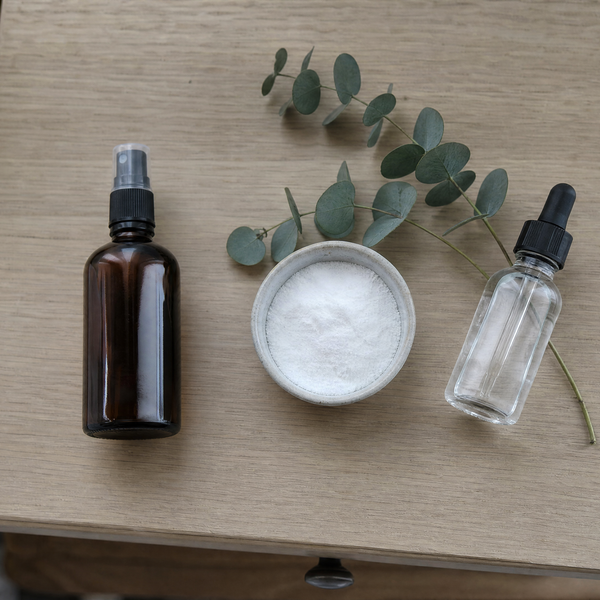
Sprinkle baking soda over the mattress, let it sit for at least an hour, and then vacuum it completely. It binds moisture and odor. Please note: baking soda does not kill dust mites or remove allergens — it is an odor treatment, not a pesticide, even though you often read otherwise online.
Allow the mattress to dry completely before making it up again. A mattress that is still damp is a better environment for mites than a mattress you hadn't cleaned.
How often?
- Weekly: Wash bedding at 60°C.
- Weekly to bi-weekly: Clean mattress with vibrating plate and filter. Weekly if you have allergy symptoms.
- Bi-annually: Turn or rotate the mattress, check for stains.
- Continuously: Keep humidity below 50% by ventilating. Dust mites extract moisture from the air and thrive poorly in a dry bedroom.
Where filtration makes the difference
When cleaning your mattress to get rid of allergens, the final filter is the component that determines whether you actually remove it or just relocate it. We had the filter medium of the MiteMaster® independently tested according to EN 1822, at an accredited laboratory. Measured capture efficiency for the most difficult particle size to capture: 99.97%, against a class requirement of 99.95% for H13. You can review the measurement data and report number.
Finally
Cleaning a mattress takes ten minutes and is most effective if done regularly rather than thoroughly but infrequently. Follow the order: first dry and mechanical, then stains, then drying. If your symptoms persist despite everything, consult your doctor — not every morning congestion is caused by dust mites.