Dust mite allergy symptoms: recognize the signs in time

In dit artikel
Do you often wake up with a stuffy nose or burning eyes? Or do you keep sneezing for no clear reason? There's a good chance you're suffering from a dust mite allergy. In this article, you'll discover the typical symptoms of a dust mite allergy, why these symptoms often worsen at night, and what you can really do about it.
What is a dust mite allergy?
A dust mite allergy occurs when your immune system reacts strongly to the droppings and body parts of these microscopic creatures. Dust mites live mainly in mattresses, blankets, carpets, and other warm, damp places in the house. Inhaling their allergens can cause various complaints, often without you knowing the cause.
Common symptoms
The symptoms often resemble a cold but last longer or keep recurring. These are the most common symptoms per body part:
👃 Nose & sinuses
- Itchy nose
- Runny nose or a stuffy nose
- Fits of sneezing, especially in the morning
👀 Eyes
- Itchy, red, or watery eyes
- Burning sensation
- Swollen eyelids
🫁 Airways
- Coughing or hawking
- Wheezing
- Shortness of breath or difficulty breathing (especially at night)
🧴 Skin
- Itchy skin or eczema
- Red rash, sometimes combined with dry patches
💤 General
- Chronic fatigue
- Headache or sore throat
- Poor sleep or frequent waking
- Symptoms when making the bed or vacuuming
Why at night or in the morning?
The symptoms of a dust mite allergy often worsen in bed. Mattresses, pillows, and duvets are favorite places for dust mites to nest. During the night, you unknowingly inhale many allergens, which can cause you to wake up with shortness of breath, coughing fits, or a blocked nose.
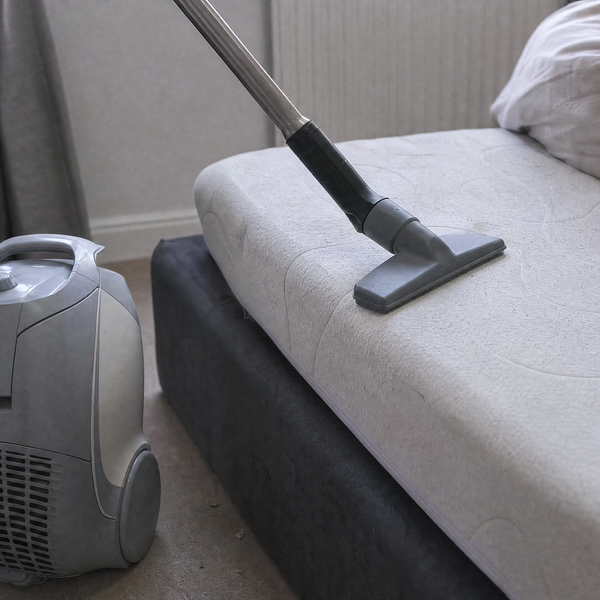
Making your bed or emptying a vacuum cleaner without a HEPA filter can also trigger symptoms due to airborne dust.
Dust mite allergy or something else?
Because the symptoms strongly resemble those of a cold or hay fever, a dust mite allergy is often overlooked. An important indicator is that the symptoms persist all year round or worsen in dusty areas such as bedrooms with carpets, curtains, or upholstered furniture.
What can you do about the symptoms?
In addition to medicines such as antihistamines or nasal sprays, there are practical measures that really make a difference:
- Wash bedding weekly at 60°C
- Ventilate daily and keep humidity below 50%
- Use an air purifier with a HEPA filter (also read: How to choose the best dust mite vacuum cleaner)
- Replace carpets and curtains with smooth surfaces
- Use a special dust mite vacuum cleaner with an H13 HEPA filter and vibrating or rotating brush
Our solution: MiteMaster®
At KLEINN & co.®, we developed the MiteMaster® vacuum cleaners specifically for people with allergies. These devices combine the power of deep cleaning with medical filtration and are ideal for mattresses, sofas, and carpets:
🔹 MiteMaster® MX6
- Vibrating plate that loosens dust from mattresses and textiles
- Powerful suction that removes the loosened allergen
- H13 HEPA filter prevents spread
- UV-C lamp for extra surface hygiene
🔹 MiteMaster® MX9 Pro
- Double rotating brushes for deep cleaning
- Heated air up to 65°C for extra hygiene
- Sealable and washable dust reservoir
Read more?
Conclusion
A dust mite allergy is characterized by chronic symptoms such as sneezing, itchy eyes, shortness of breath, and fatigue. These symptoms often worsen at night and can significantly affect your quality of life. Fortunately, effective solutions exist, such as the MiteMaster® vacuum cleaners, which allow you to specifically remove allergens and make the air in your home cleaner and healthier.
👉 Don't wait any longer and choose a healthier living environment:
MiteMaster® MX6 or MiteMaster® MX9 Pro